
The correct way for educational and training institutions to increase profits is not to reduce costs

From a macro perspective, reducing costs is indeed a method in economics to increase profits, but at a micro level, in the education and training industry, cost reduction is actually the biggest misconception in the operation of training institutions. The content of training institution costs is very transparent, with little waste. Among various costs, labor costs are the largest, and the vast majority of institutions have poor performance, with the following common characteristics:
1. Multiple positions per person
Seemingly saving money actually reduces revenue - in fact, the limited salary increase system content is difficult to support sufficient incentives for various goals, and instead reduces efficiency and revenue;
Difficulty in improving operational management level - The work content of various positions in educational and training institutions is cumbersome, and one person with multiple positions does not have the soil and conditions to improve management level;
2. There is no marketing department or integrated marketing
Heavy emphasis on teaching and light emphasis on marketing - No matter how good a product is, having no customers is a dead end. All bankrupt institutions experience the same fact: reduced customers, decreased revenue, reduced renewals, and a vicious cycle;
All staff marketing - everyone doing is equal to everyone not doing, or not putting in effort when working. From customer acquisition to customer visits, from customer visits to visits, from sales to learning, to service and renewal, etc., the goals of any link in the entire business chain need to be supported by corresponding positions or salary content. Without corresponding salary content, management cannot be implemented;
Not willing to invest in the market - Many education and training institution owners are too lazy to calculate and analyze, or simply do not understand how to analyze market ROI. On the one hand, this is the result of a lack of talent, and on the other hand, it is the result of not learning and mastering the correct industry knowledge.
So, increasing revenue for educational and training institutions is the correct way to increase profits, not reduce costs.
How to increase revenue for training institutions
Enhance customer acquisition in the market
1. Establish a professional marketing department and prioritize customer acquisition.
Customer acquisition is the starting point of the business chain for training institutions in the education and training industry. Insufficient customer acquisition is the primary reason for the low revenue of the vast majority of small and medium-sized institutions. Say the important thing three times: it's not the product! Not a product! Not a product! Without raw materials to produce yarn, training institution owners who do not actively acquire customers from the market are just playing with themselves, so they need to recruit professional marketing personnel.
Market management content - in addition to recruitment, training, and compensation systems, it also includes various points, mobility, activities, customer acquisition, visits, contract data analysis for full-time and full-time categories that are missing in the vast majority of training institutions, daily goal achievement and missing analysis, advertising cost analysis;
TMK Professional Invitation - Seven days a week, delivering visits to the campus on schedule, taking into account visit strategies and guidance at different times, designing different visit plans and incentives; Please find attached a summary of documents from other institutions' promotion management, which can be used as a reference to see how their marketing departments manage promotion
Improve the curriculum system
1. Rich and reasonable peripheral courses:
Event/Grading Tutoring - Many quality related subject trainings include various social events and grading exams, and short-term courses are set up to promote consumption and excellence;
Study abroad/outdoor courses - scattered fees, or consumption of scattered extra class hours, with strong flexibility and easy operation;
Cold and Heat Vacation Camp - Short term project fees, short delivery cycle, and easy to ensure the schedule goals of holiday classes;
Peripheral products - implant cultural attributes, sell necessary equipment, tools, clothing, supplies;
2. Adequate tutoring mechanism to promote class consumption:
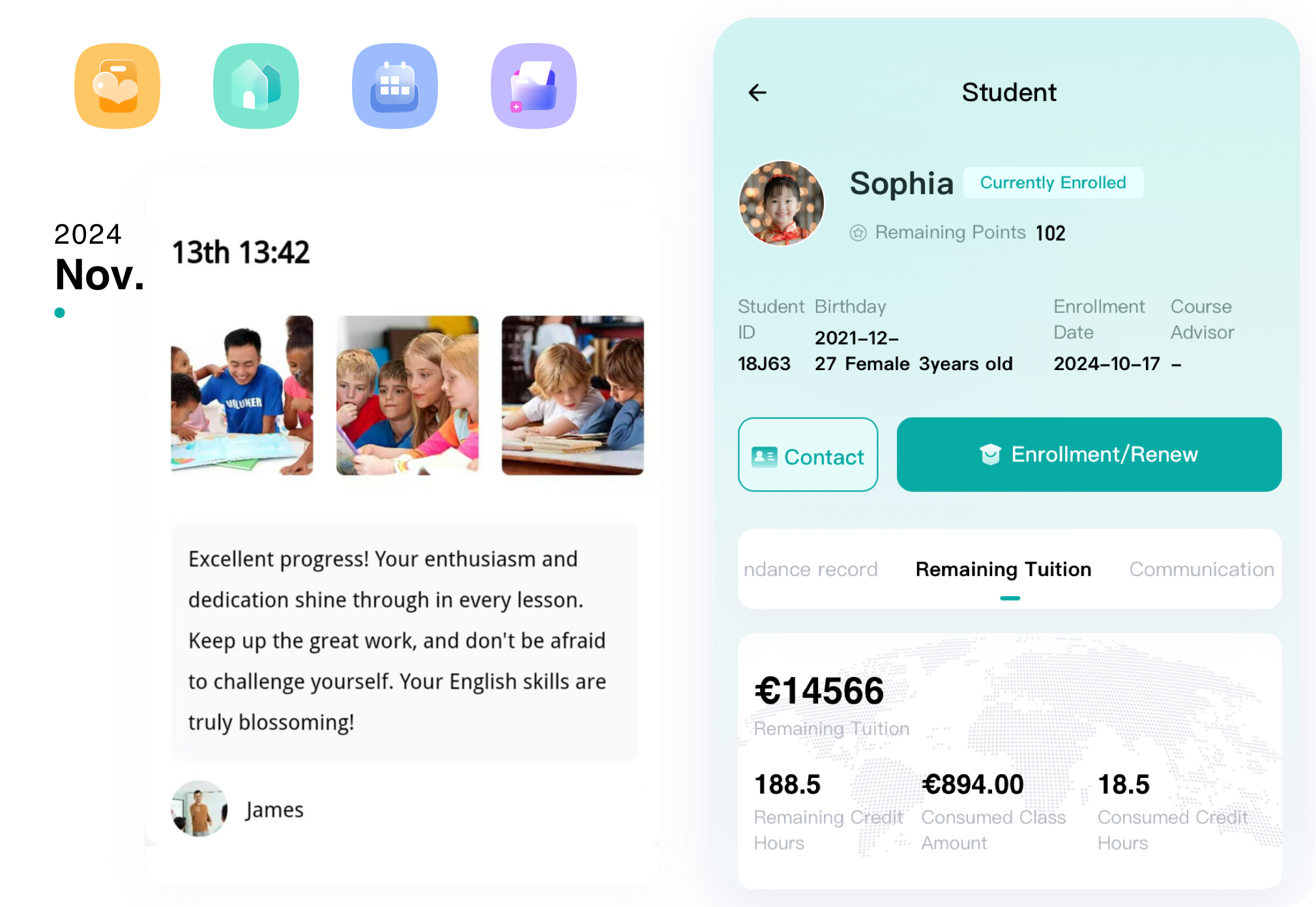
Improve make-up classes - actively invite absent students to attend make-up classes, reduce classroom waste, and align the progress of missed classes;
Cancel the leave system - There are logical bugs in the leave system. By using correct course management, the occurrence of delayed class hours can be eliminated, and the contradiction in teaching management can be resolved;
3. Optimize the curriculum system:
Reasonable course ladder length - The vast majority of training institutions generate 75% or even 85% of their revenue from students in the first half of the system courses. Excessive teaching enthusiasm leads to a heavy curriculum system, a large number of class hours, and increased recruitment and delivery costs;
Be cautious with layered teaching - Layered teaching is equivalent to increasing the variety of courses. The more courses there are, the lower the classroom occupancy rate, which directly increases delivery costs and reduces profits.
How to improve the operational efficiency of training institutions
Improve sales conversion efficiency
1. Without proper sales management and training, any sales training is fleeting.
The correct sales training is: process= steps + rhetoric, skills are small tricks, rhetoric can be infinitely iterated, steps are fundamental, without theoretical research and divergent thinking cultivation, it is just empty talk and bottomless pit;
2. The premise of renewal is service standardization and process based renewal.
Summarizing renewal cases can help design the renewal process, ensuring clear types and quantities of daily services, and presenting learning data to lay a factual foundation for the renewal workflow, avoiding empty words and arbitrary fabrication;
3. Improve the management level of sales and renewal.
The sales process and renewal process are the process design work to solve the problem of training institutions increasing revenue. Parents' problems have no end, not in completeness, but in classification and induction. A process that can be universally operated by all employees is the effective and implementable process. Managers are required to fully consider and design it based on frontline facts in a timely manner, including specific learning data, stage evaluation results, specific progress and shortcomings, parental expectations/hopes for teacher attention/children's wishes, and subsequent learning introductions;
Improve resource utilization efficiency
1. Classroom utilization rate and teacher hours
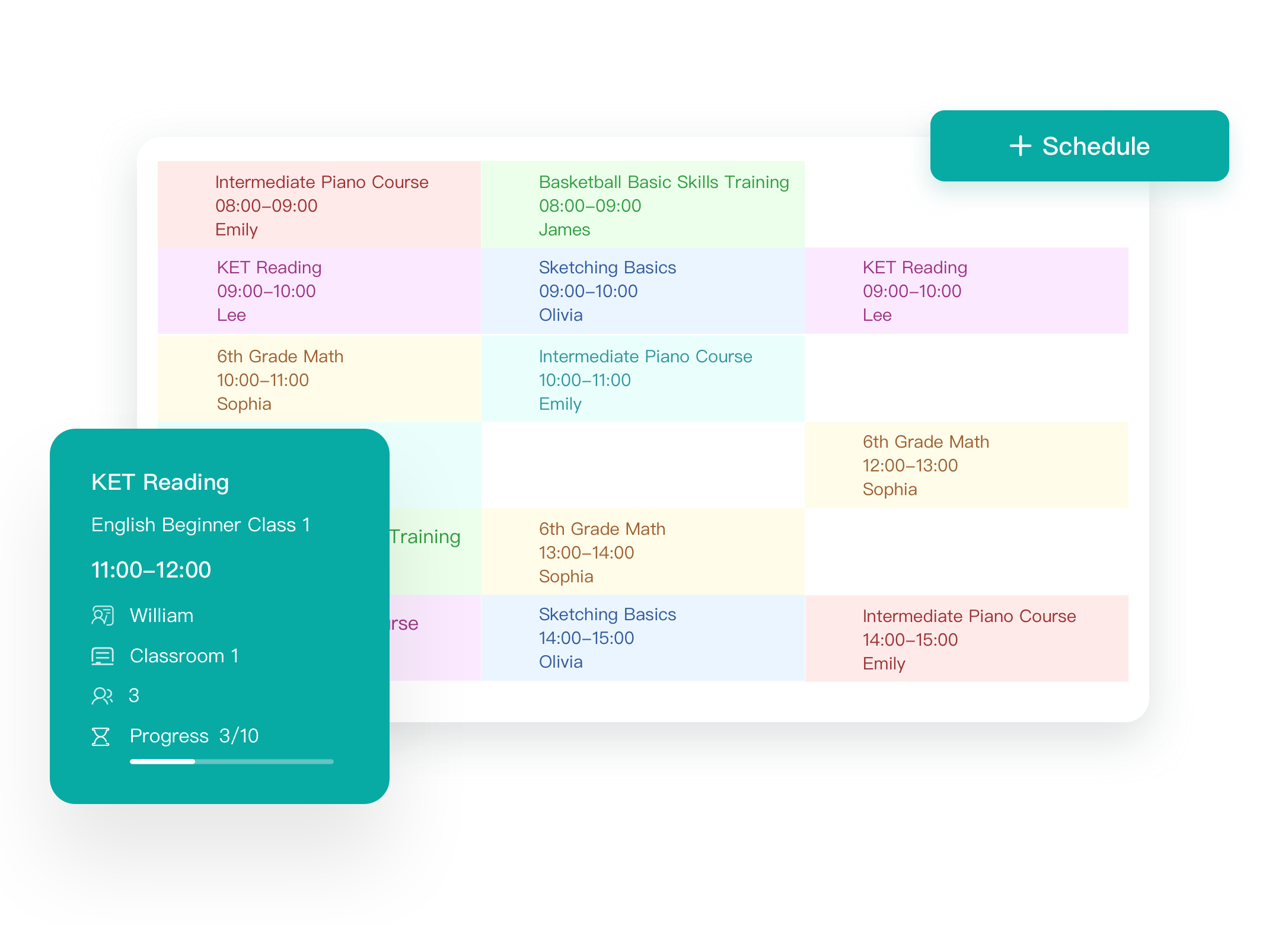
Refusing to close schools for rest - Classroom closure is a fixed cost, and campus closure for rest is a huge waste. Although the campus has not recruited enough students, closing the doors means reducing sales opportunities and missed classes;
Increase the number of teacher hours - Teachers work 40 hours a week. Some institutions only arrange 15 hours of teaching time per teacher per week, while others can achieve more than 25 hours of teaching time. The ratio of teacher salary to class consumption: how much class consumption income can be generated for each dollar of teacher salary, directly affecting the proportion of training institution's labor costs in total revenue;
Course scheduling logic - the best class time is reserved for market experience courses, with revenue prioritized over delivery;
2. Efficiency driven salary system design
Refusing to endure qualifications - the salary for grassroots positions must be combined with the short-term operational goals of the campus, closely linked to sales revenue, renewal amount, student performance introduction, course consumption, and service volume;
Salary before performance - Salary is the basis for calculating monthly workload and paying salaries, while performance is the basis and regulations for deciding promotions, demotions, and whether to stay or leave during a certain period;
3. Price differentiation of courses at different time periods
Price differentiation - there can be price differences between busy and idle courses;
More time slots - guiding preschool children to come to institutions for study in the middle and afternoon of the week, at a cheaper price, once a week, is not impossible; Incentives - Different reward policies can be tilted towards the sale of courses at different time pers is the effective and implementable process. Managers are required to fully consider and design it based on frontline facts in a timely manner, including specific learning data, stage evaluation results, specific progress and shortcomings, parental expectations/hopes for teacher attention/children's wishes, and subsequent learning introductions;