






















Mastering Smart Scheduling: Avoiding Conflicts Between Private & Group Classes
Time:2025-10-16
Source:Artstep
——Creating Balance Between Flexibility and Efficiency
In the daily operation of training centers—whether for dance, music, or art—scheduling can quietly become a nightmare. You might have a perfect curriculum, talented instructors, and enthusiastic students, but one simple scheduling overlap—two private lessons colliding with a group rehearsal, or a classroom double-booked—can cause frustration for everyone involved.
The challenge lies in how different formats demand different scheduling priorities.
Private lessons thrive on personalized flexibility—students and teachers negotiate times, often needing to reschedule on short notice. Group classes, on the other hand, rely on consistency and predictability, since a dozen families plan around a shared timetable. The real art of scheduling, therefore, is not just about filling slots, but balancing autonomy with structure.
An effective timetable should start from capacity planning. Map out which time slots are “prime hours” based on attendance trends, then allocate your group lessons there for maximum participation. Private lessons can fill in the off-peak hours or weekends, allowing resources—like classrooms and instructors—to be fully utilized without overlap.
Another critical layer is teacher workload distribution. Many institutions underestimate how fragmented teaching schedules can become when private and group classes coexist. To prevent burnout or gaps, categorize instructors based on availability and specialization, then visualize their teaching load. Even a simple color-coded calendar can reveal hidden inefficiencies—like an instructor spending an hour idle between two short sessions.
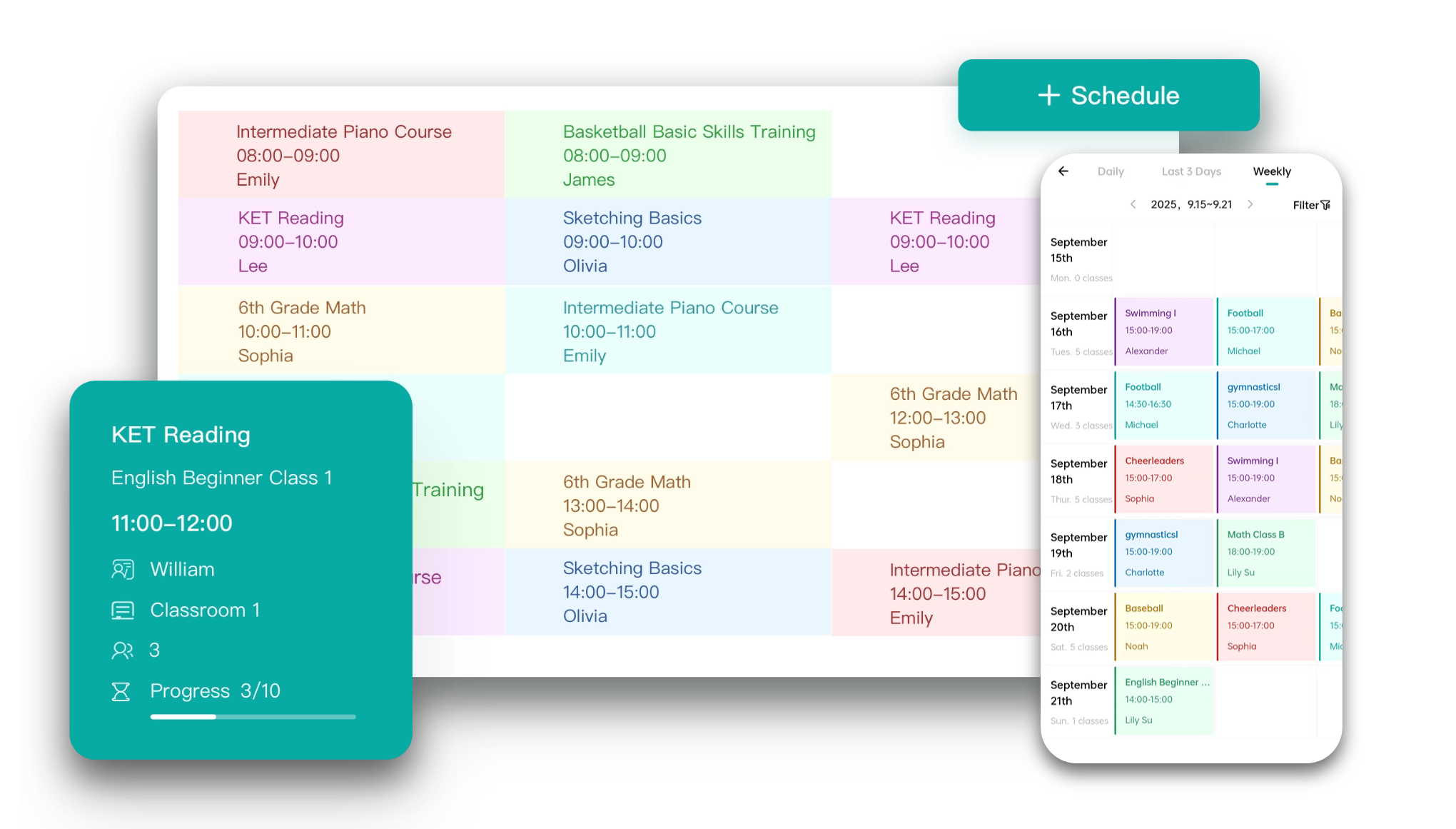
At this point, many schools realize spreadsheets and paper schedules can’t keep up. Manual coordination easily leads to confusion—especially when students cancel, reschedule, or join mid-term. What’s needed is not just an Excel sheet, but a smart, centralized scheduling system that integrates all course types and participants.
That’s where Artstep’s class management system transforms the process.
Within Artstep, you can:
- Visually manage all private and group classes in a unified calendar view.
- Automatically detect conflicts—whether it’s room allocation or instructor overlap.
- Adjust schedules instantly, with notifications sent to teachers and parents in real time.
- Use data analytics to monitor classroom utilization, identify underused slots, and optimize future course planning.
Most importantly, Artstep’s one-on-one lesson management module allows you to pair teachers and students effortlessly—supporting flexible recurring or single appointments, time-based billing, and even integrated attendance tracking. For group lessons, it synchronizes class rosters, ensuring that every update reflects across attendance records, teacher assignments, and payment logs—eliminating the classic “who’s supposed to be in this room right now?” problem.
Smart scheduling is not only about avoiding chaos; it’s about freeing up human capacity for what truly matters—teaching, creativity, and connection.
With systems like Artstep handling the logistics, your staff no longer spend hours cross-checking timetables. Instead, they can focus on designing better programs, engaging parents, and growing your school.
Because when your schedule flows smoothly, everything else—from learning outcomes to customer satisfaction—falls naturally into place.