
The fastest path for an institution to grow is to learn systematic review

Why do some "reviews" have no effect? It's because your review process went astray. If the purpose of a review is to prove that "we have already worked hard", find a "scapegoat", or give an explanation to superiors or bosses, then this review is bound to only consume emotions and not bring about change.
A valuable review must first meet these prerequisites:
Firstly, express oneself candidly.
Do not cover up, do not embellish, and do not describe 'problems' as' challenges'. Secondly, seek truth from facts.
Speak with facts and data without relying on feelings or impressions. Thirdly, focus on the matter rather than the person.
The discussion is about 'where went wrong', not 'who couldn't'. Fourth, brainstorm.
Involve different roles and perspectives, rather than drawing conclusions alone. Fifth, delve into the root cause.
We do not accept vague answers and do not hastily conclude with 'bad environment' or 'poor overall environment'.
As long as any prerequisite is missing, the review will become a 'self comforting summary'.
So, what should we do for the annual review?
Step 1: Review the goals, rather than listing things.
Many institutions will review them and say, "We have done a lot of things this year..." However, the truly effective review is never a list of things, but a comparison of goals.
You need to answer these questions with data: What is the enrollment target set at the beginning of the year? How many students were actually recruited? How many students have been lost? What are the core reasons for not renewing?
As long as the goal is compared, it is clear which ones are deviations and which ones are problems.
Step 2: Identify the areas where you did the "best" this year.
Reviewing is not just about focusing on problems, you also need to figure out which things were done right.
For example, is the enrollment effect better than last year? Is the renewal structure healthier? Or is home school communication more stable and complaints significantly reduced?
These 'right places' are not meant to show off, but to tell you which abilities are worth further amplifying next year.
Step 3: Dig deeper into the reasons, instead of writing "beautiful words".
Many reviews fail because the problem lies in the "cause analysis" stage. The more grandiose the reasons are written, the less useful it is to review them For example, "the market environment is not good" and "competition is too fierce", these words are not wrong, but they have no practical value.
An effective method is to ask yourself why multiple times for the same result.
1.Taking enrollment as an example: 1. Why have fewer people come to the store for consultation;
2. Why has the willingness of parents to register decreased after consultation;
3. Was there a lack of effective communication before, during, and after the trial lesson;
4. Why didn't the recruitment techniques used before work; 5. Why is our institution not seen by parents.
Follow our reasoning layer by layer until we find the key point that can change the result with just one change. Only at this stage can the review be truly valuable and the action plan be truly implemented.
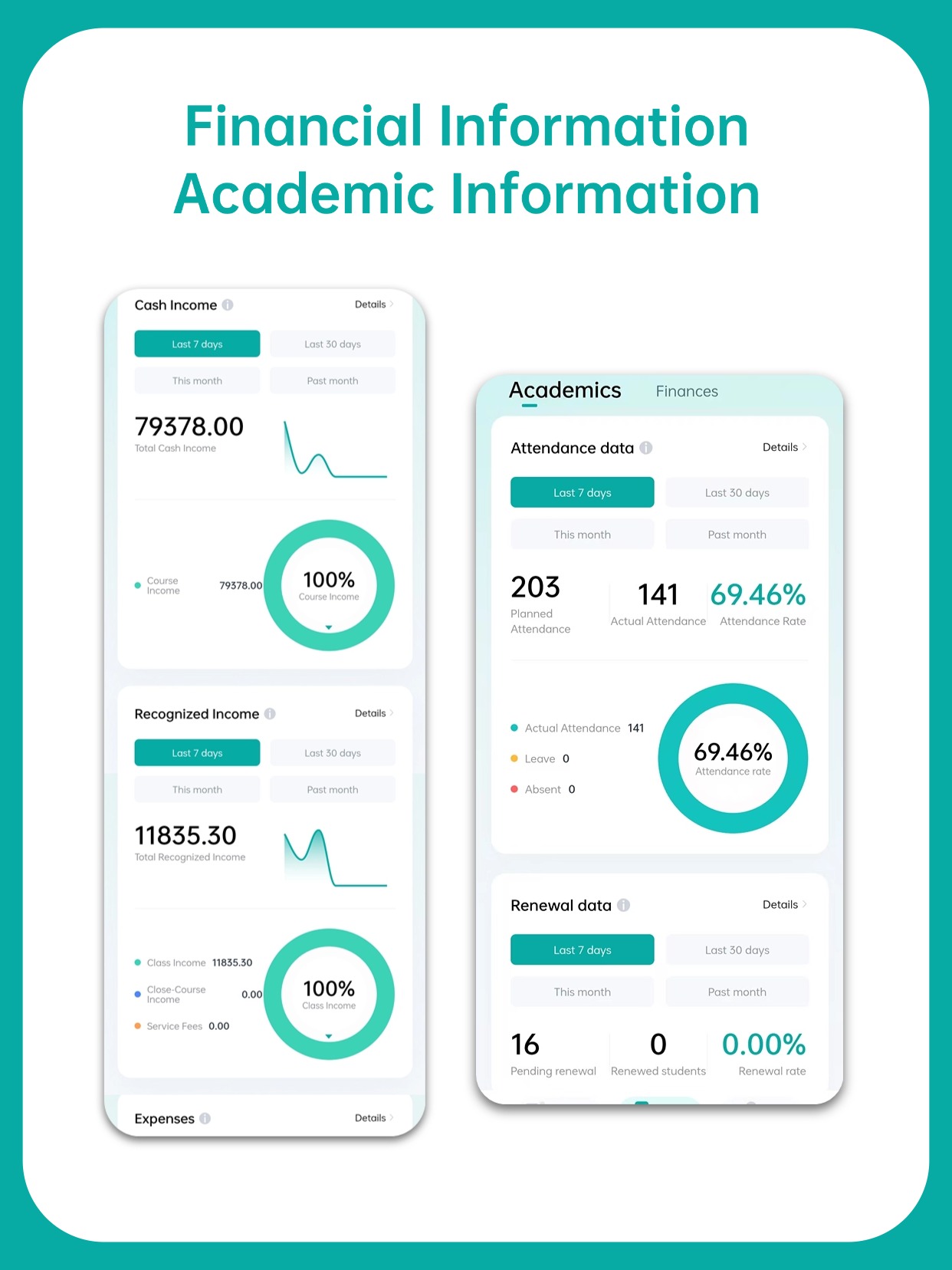
You can open the academic system and conduct an annual inventory based on this year's academic, teaching, financial, and enrollment data.